
Abstract blue neural network

Hybrid operating
model.

At Zetech, we don't run management as a rigid hierarchy. Our system combines a role-based structure, open discussion of decisions, the weight of an argument earned through competence, and a leader's final call where it's needed. This model helps us adapt faster to a changing world — preserving initiative, speed, and entrepreneurial energy without sliding into bureaucracy or chaos.

How it works

Structure → Roles

We organize work around roles, functions, and areas of responsibility rather than a cumbersome job ladder. A person is given a function and a space of responsibility, not just a narrow set of tasks. This keeps the system flexible and helps it adapt to new projects and new business directions. In our own guidelines, the structure is described as hybrid, divisional, and decentralized.

Decisions → Discussion

Initiatives and decisions shouldn't die inside long approval chains. At Zetech, ideas move through discussion, not administrative suppression. Any team member can propose an initiative, a standalone project, a new product, or a process improvement — and from there either simply submit the idea, lead it themselves, or join a team already testing the hypothesis.

Argument weight → Competence

We hold to the principle that not every opinion carries equal weight on every question. Decisions should lean more on those closest to the problem — those with a deeper grasp of the market, the product, the customer, or the operational reality. This doesn't cancel discussion, but it protects the system from empty politicking.

Final arbiter → Project leader

Discussion matters; paralysis does not. So when a direction needs to be set, momentum kept, and ultimate responsibility taken, the final decision rests with the founder or the leader of the relevant project. This isn't about authoritarianism — it's about managerial clarity.

Leader and Team

At Zetech, every brand grows under the guidance of a Leader. We've moved away from “directive management” in favor of partnership. Here, a Leader is not an administrator controlling every step, but a strategic center and the driving force of the team. Their core role is to shape the future of the product together with colleagues — from choosing markets and target audiences to forming a vision for years ahead.

Two mountaineers ascending a snowy slope
Person planning a strategy on a whiteboard

How ideas move at Zetech

If someone believes in a project, they don't have to wait for the idea to eventually land in a long-term plan. At Zetech, initiative has a path forward. It takes securing the support of at least two team members and preparing a rationale to obtain funding. We deliberately foster an environment of corporate entrepreneurship, where strong ideas can grow into new products, directions, and ventures. This lets projects emerge not from bureaucracy, but from genuine engagement and a well-formed initiative.

Baker handing a paper bag to a customer

A commitment-based system

Instead of a bureaucratic management system and KPI-centric control, we use a system of commitments — a “client–provider” model of relationships. The provider isn't required to follow a strictly prescribed process; they're expected to deliver a specific result. Rights and responsibilities rest largely in the provider's hands. Any team member can act as a client or a provider. A client can change providers — and therefore is also accountable for the quality of delegation. This makes relationships inside the company more mature, transparent, and results-oriented.

Aerial view of a green park with winding paths

Trust and internal mobility

We let people be self-directed, give them rights and responsibilities, and don't build the system around total control. Trust is there for everyone from the start, even newcomers: it doesn't have to be earned first, though it can be broken. Career growth at Zetech isn't based on a system of grades, but on internal mobility, initiative, expanding one's skills, and moving into the roles where a person can add the most value.

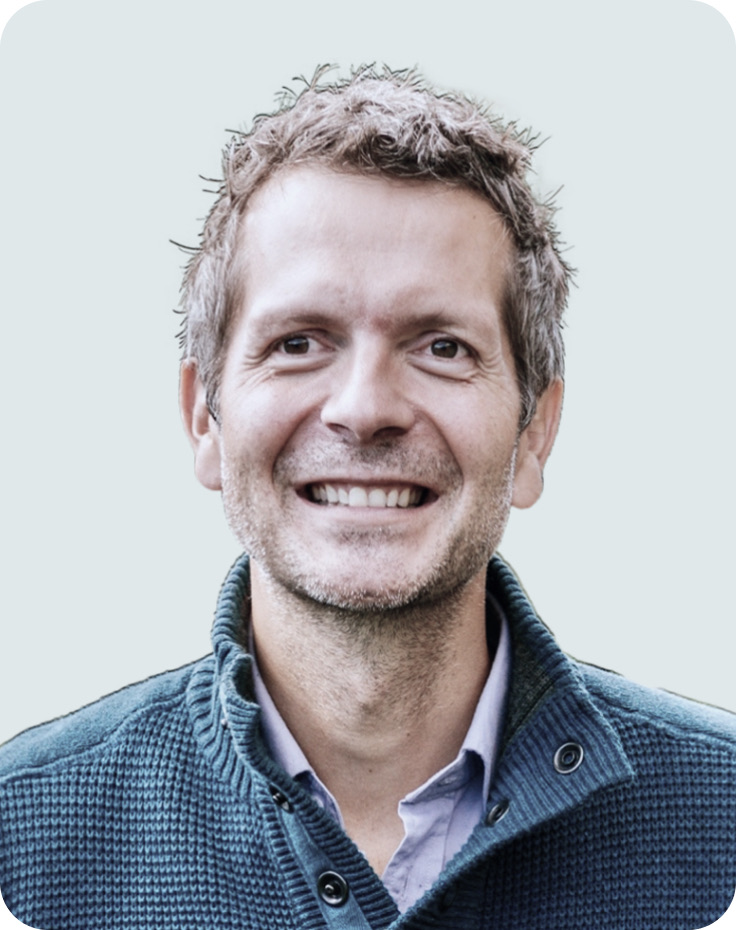
“In self-managed organizations, power is not the same as control. When structure is built around roles and transparent agreements rather than a rigid job hierarchy, people stop spending their energy on internal politics and channel it into genuine service of the purpose.”

Frederic Laloux
Portrait of Frederic Laloux
Architectural curves with a blue gradient

Discover the Zetech ecosystem in action

Get to know the niches and brands we're building within the group.

Explore our ventures